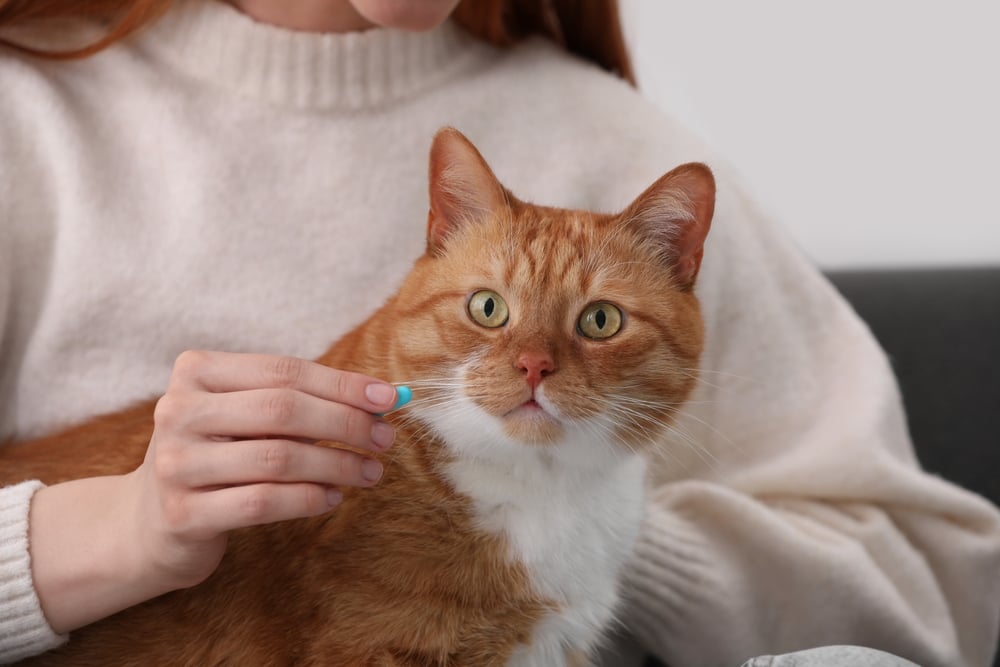
Giving medication to a cat can be one of the most stressful parts of treatment for both you and your pet. Cats are highly sensitive to taste, texture, smell and restraint, and many will actively resist pills or liquids once they associate them with discomfort.
When your cat won’t take medicine, it does not mean the treatment is inappropriate. It often means the formulation or administration approach needs to be adjusted. Some cats may also drool or foam at the mouth after medication, which can be alarming for pet parents. In most cases, this reaction reflects a normal salivary response to bitter taste rather than a sign of toxicity or harm.
In many cases, veterinarians begin with commercially available medications that are well studied and widely used. If a cat struggles with administration, the conversation often shifts to formulation options rather than changing the medication itself.
This article explains why cats reject medication, veterinarian-approved techniques that can improve success, and how compounded formulations can play a role when standard options don’t work.
Why Won’t My Cat Take Medicine?
Many medications are bitter, chalky or strongly scented, which can trigger an immediate aversive response. This same taste sensitivity is also why some cats foam or drool excessively after medication, particularly with bitter liquid formulations. Cats are biologically wired to detect these unfamiliar tastes and textures.
Past negative experiences, stress from restraint or underlying illness can further reinforce refusal.
Reasons your cat won't take medicine could include:
- Strong or bitter taste
- Large pill size or difficult texture
- Stress associated with restraint
- Nausea or gastrointestinal upset
- Pain or oral sensitivity
When medication becomes a daily battle, missed doses or incomplete treatment courses can occur. Veterinarians often reassess not the medication itself, but how it is being delivered.
Proven Tips: How to Give Medicine to a Difficult Cat
Gentle handling, calm environments and predictable routines can significantly improve acceptance over time. Veterinarians emphasize minimizing stress and avoiding force whenever possible.
Helpful strategies include:
- Administering medication in a quiet, familiar space
- Keeping handling time as brief as possible
- Using positive reinforcement after dosing
- Avoiding scruffing or forceful restraint unless specifically advised
What if your cat won't take medicine even after employing these techniques? Unfortunately, this is the case for many cats. At this stage, alternative formulations are often discussed.
Your Dog Won’t Take Meds, Either? We’ve Got Tips →
What If My Cat Won’t Take Pills?
First, don’t panic. This is common and there are other options. Tablets and capsules can be difficult for cats to swallow and may trigger gagging or drooling. Even cats that initially accept pills may begin refusing them after repeated exposure.
Many cats are prescribed commercially available tablets or capsules initially. When these standard forms are difficult to administer, veterinarians may explore alternative formulations to support adherence and reduce stress.
Veterinarians may explore alternatives such as:
- Samller capsules compounded to the exact presribed strenght
- Liquie formulations that allow slow, controlled administration
- Dividing doses where clinicall appropriate and veterinarian-directed
- Transdermal medications
- Small flavored chew treats
Compounded capsules can be made smaller than many commercially available tablets, which may improve tolerance in cats that resist larger pills.

Are Liquid Medications for Cats an Easier Option?
Some medications are available as commercially manufactured liquids, while others may only be available in tablet form. For cats that reject pills or unflavored liquids, veterinarians may discuss flavored or alternative liquid formulations prepared by a pharmacy. Liquid medications are often easier for cats that cannot swallow pills, but taste remains critical. Unflavored or bitter liquids are frequently rejected.
Bitter liquid medications are also a common reason cats foam at the mouth immediately after dosing. This foaming is typically a reflexive response to taste and oral irritation and usually resolves within minutes. Reducing volume, slowing administration and using a cat-appropriate flavor may help minimize this reaction.
Veterinary compounding pharmacies can prepare flavored liquid formulations designed specifically for cats. Flavoring options are selected based on your cat’s preferences and medication compatibility. Adjusting concentration can also reduce the volume required, which may improve acceptance.
Top 5 Tips for Giving Cats Liquid Medicine
These tips may help improve success and reduce anxiety for both you and your cat:
- Use the Cheek Pouch: Administer liquids slowly into the side of the mouth (the cheek pouch), rather than straight down the throat. This helps your cat swallow naturally and reduces the risk of choking or aspiration.
- Go Slow and Steady: Deliver the medication in small amounts, allowing your cat time to swallow between squirts. Rushing can cause coughing, drooling or foaming, especially with bitter-tasting medications.
- Position Matters: Gently hold your cat upright or in a comfortable seated position. Avoid tipping the head back too far, which can make swallowing more difficult.
- Minimize Stress: Choose a quiet space and handle your cat calmly.
- Positive Reinforcement: Offering a favorite treat, small meal, or affection afterward can help create a more positive association with medication time.
A veterinarian or veterinary pharmacist can demonstrate proper administration techniques and recommend the most appropriate formulation for your cat’s specific medication and temperament.
While brief drooling or foaming after medication is common, reactions that persist or are accompanied by vomiting, lethargy or behavioral changes should always be discussed with a veterinarian. These signs may indicate irritation or a medication-specific sensitivity that warrants a different approach.
Are Transdermal Medications for Cats an Easier Option?
Yes—transdermal medications can be a simpler solution for cats who refuse pills. Transdermal formulations are an option for some medications and conditions. These are applied to the inner surface of the ear pinna and absorbed through the skin.
Transdermal medications are commonly discussed when:
- Oral administration is not feasible
- Your cat experiences severe stress with handling
- Long-term daily medication is required
Not all medications are suitable for transdermal use and absorption can vary between cats. Veterinarians determine whether a transdermal option is appropriate based on the medication, condition and clinical goals.
Hiding Medication in Food: When It Helps vs. When It Doesn’t
Hiding medication in food can be a common tactic when your cat won't take medicine. While it may work for some cats—particularly with highly palatable compounded formulations—many cats will detect even small changes in smell or texture and refuse the entire meal.
Veterinarians generally caution that food-based administration should only be used when:
- The medication is confirmed safe to give with food
- Precise dosing is not compromised
- Your cat reliably consumes the full portion
If your cat associates their favorite food with medication, they may permanently reject that food. This approach should be discussed with a veterinarian before attempting.
Special Considerations: Antibiotics and Other Time-Sensitive Medications
For antibiotics and other medications where consistency matters, missed or partial doses can reduce effectiveness or contribute to treatment failure.
Veterinarians may prioritize formulations that improve reliability rather than relying on repeated forceful attempts.
How Can Compounding Help If My Cat Won't Take Medicine?
Veterinary compounding helps by allowing medications to be customized to meet your cat’s specific needs while following a veterinarian’s prescription.
This may include:
- Adjusting strength to reduce dose volume
- Creating smaller capsules
- Adding cat-appropriate flavoring
- Preparing transdermal formulations when appropriate
- Reducing bitterness or irritation that may cause drooling or foaming after dosing
The goal of compounding is not to change the prescribed medication, but to make it more manageable for the individual patient, which can improve adherence and reduce stress.
What Should I Do if My Cat Won’t Take Medicine?
If your cat consistently refuses medication, it is important to communicate early with a veterinarian. Veterinarians can assess whether a different formulation, route of administration or supportive strategy is appropriate.
Key Tip: Never alter dosing, crush tablets or switch administration methods without veterinary guidance. What seems like a small change can significantly affect how a medication is absorbed or tolerated.
Frequently Asked Questions: Giving Medicine to Cats
Why Is My Cat Suddenly Refusing Medicine?
Cats may begin refusing medicine due to:
- Taste aversion
- Stress from repeated handling
- Changes in how they feel physically
A veterinarian can help determine whether the issue is behavioral, formulation-related or linked to the underlying condition.
Is It Safe to Crush a Pill and Mix It With Food?
Not all medications are safe to crush or give with food. Some medications have coatings or release properties that should not be altered.
Always confirm with a veterinarian before changing how a medication is given.
Are Transdermal Medications for Cats as Effective as Oral Medications?
The answer varies by drug and by cat. For certain medications, transdermal absorption can be effective. Veterinarians evaluate whether transdermal delivery is appropriate based on clinical evidence and the individual patient.
Why Is My Cat Foaming at the Mouth After Medicine?
Foaming at the mouth after medication is most commonly caused by taste aversion and salivary reflexes rather than toxicity. Many liquid medications are naturally bitter, and cats may respond by excessive salivation or foaming as a reflex to an unpleasant taste.
In most cases, this reaction is temporary and harmless and resolves within minutes. To help mask the flavor, offer your cat a treat or a small amount of water in a syringe immediately following administering their medication. If your cat continues to foam or seems particularly bothered by the medication, using a flavored compounded formulation or adjusting the medication’s concentration to reduce volume may help minimize this response.
However, persistent foaming, vomiting, lethargy, or signs of distress should be evaluated by a veterinarian to rule out irritation or an adverse reaction.
Is It Normal for Cats to Drool After Taking Medicine?
Yes—mild drooling after taking medication is common in cats, especially with liquid or bitter-tasting medications. Drooling typically reflects a normal salivary response rather than a medical problem.
Drooling often decreases when medications are:
- Properly administered into the cheek pouch
- Flavored for your cat’s preferences
- Compounded to require smaller volumes
If drooling is excessive, prolonged, or accompanied by behavioral changes, a veterinarian should be consulted to determine whether an alternative formulation or administration method is needed.
Can a Pharmacy Help If My Cat Won’t Take Medicine?
Yes—veterinary compounding pharmacies can work with your veterinarian to prepare alternative formulations that may be easier to administer. These options are always veterinarian-directed.
Make Medication Time Simple for Your Cat—Not Stressful
Pet parents are often unsure how to give medicine to a difficult cat. It’s a common problem, but fortunately, it does not always indicate treatment failure and can often be addressed with straightforward formulation changes.
Talk to your veterinarian if medication administration has become difficult. Veterinarian-approved techniques—combined with compounded formulations from a pharmacy team when appropriate—can reduce stress and improve consistency.
Whether your cat is prescribed a commercially available medication or a customized compounded formulation, a veterinary pharmacy can help support safe, consistent administration. Mixlab works with your veterinarian to dispense both commercial and compounded prescriptions—delivered fast and free to your doorstep.