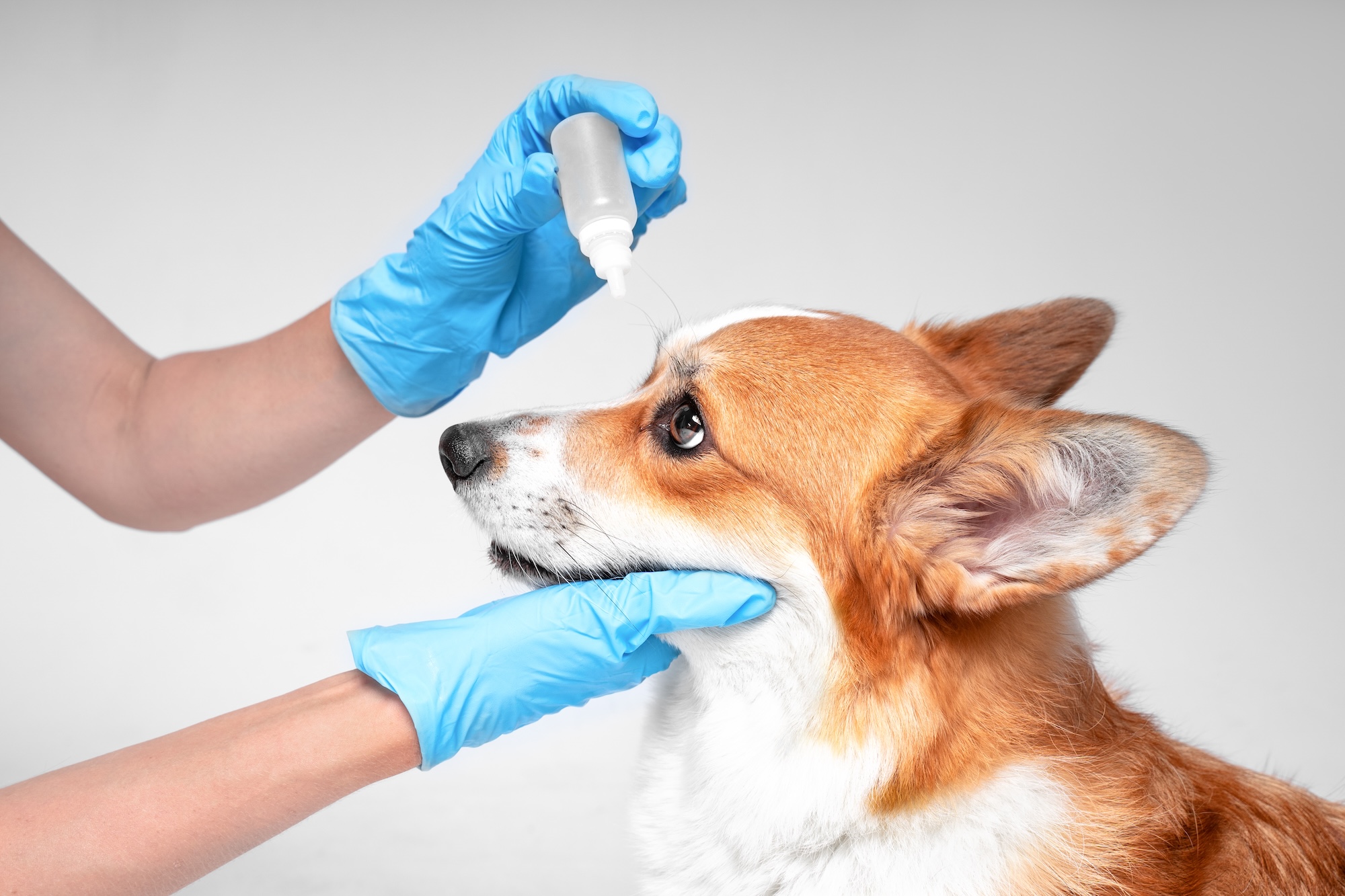
According to a 2025 study published in Veterinary Sciences, conjunctivitis alone accounts for nearly 28% of all diagnosed ocular conditions in dogs, and that’s just one of the many diseases that can affect your dog’s vision. The good news is that most dog eye conditions are manageable when caught early and treated consistently. If your dog’s eyes look red, cloudy or uncomfortable, don’t wait.
Here’s what you need to know about the most common dog eye diseases and how veterinarians diagnose and treat them.
What Are the Symptoms of Eye Disease in Dogs?
Eye disease in dogs can show up in several ways — some obvious, some easy to miss.
Common signs to watch for include:
- Redness or visible inflammation
- Watery eyes or abnormal discharge
- Squinting or excessive blinking
- Cloudiness or haze over the eye
- Swelling around the eye
- Pawing or rubbing at the eye
- Change in pupil size
- Bulging eyes
- Cherry eye (a red, fleshy mass at the inner corner of the eye)
Because some conditions don’t produce visible symptoms in early stages, a thorough eye exam from a veterinarian is the only way to get an accurate diagnosis. The sooner a problem is identified, the more treatment options are typically available.
What Are the Most Common Eye Diseases in Dogs?
Several eye conditions affect dogs with meaningful frequency. Here’s a breakdown of the most commonly diagnosed.
|
Condition |
What It Is |
Key Symptoms |
Primary Treatment |
|
Conjunctivitis |
Inflammation of the conjunctiva (pink eye) |
Redness, discharge, swelling |
Topical drops or ointments, antibiotics |
|
Corneal Ulcers |
Injury or erosion of the cornea |
Pain, cloudiness, discharge |
Antibiotic and lubricating drops; sometimes surgery |
|
Glaucoma |
Fluid buildup causing elevated intraocular pressure |
Bulging eye, redness, cloudiness, dilated pupil |
Medicated drops; may eventually require surgery |
|
Cataracts |
Clouding of the eye’s lens |
White/cloudy appearance, vision loss |
Surgical removal |
|
Dry Eye (KCS) |
Insufficient tear production (keratonconjunctivitus sicca) |
Sticky discharge, chronic redness, dull eye surface |
Immunomodulatory drops (e.g., cyclosporine, tacrolimus) |
|
Pannus |
Immune-mediated progressive corneal disease |
Pink raised mass on cornea, pigmentation, cloudiness |
Lifelong topical corticosteroids and/or immunomodulators |
|
Cherry Eye |
Prolapse of the third eyelid gland |
Visible red-pink mass at inner eye corner |
Surgical repositioning |
|
Entropion/Ectropion |
Eyelid rolling inward or outward |
Chronic irritation, tearing, infection risk |
Surgical correction |
What is Pannus Eye Disease in Dogs?
Pannus (also called chronic superficial keratitis or CSK) is an immune-mediated condition in which the dog’s own immune system attacks the cornea, causing progressive inflammation, blood vessel growth and scarring. Left untreated, pannus can lead to blindness.
The condition most commonly affects German Shepherds, Belgian Tervurens, Greyhounds and Rottweilers, though any breed can develop it. Most dogs are diagnosed between four and seven years of age. Dogs living at higher altitudes or in high-UV environments tend to experience more severe or faster-progressing cases.
Pannus has no cure, but it can be well-controlled with consistent long-term medication. A veterinarian will likely recommend topical corticosteroids (such as prednisolone or dexamethasone) and/or immunomodulatory drops like cyclosporine. UV-protective eyewear, such as dog goggles, may also be recommended for dogs spending time in bright conditions.
What Does Pannus Look Like?
The first sign is typically a raised, pink or grayish mass on the outer edge of the cornea, often described as the 8-11 o’clock position on the right eye or the 1-4 o’clock position on the left. Over time, the cornea darkens with pigmentation and can become opaque.
How Do Veterinarians Diagnose Eye Disease in Dogs?
A veterinary eye exam typically includes several tests depending on the suspected condition:
- Schirmer tear test: Measures tear production to diagnose dry eye
- Fluorescein stain: Identifies corneal ulcers or surface damage
- Tonometry: Measures intraocular pressure to detect glaucoma
- Slit-lamp biomicroscopy: Examines internal eye structures in detail
For complex cases, your veterinarian may refer your dog to a board-certified veterinary ophthalmologist.
How Are Dog Eye Diseases Treated?
Treatment depends entirely on the diagnosis. Most dog eye conditions are managed with ophthalmic medications applied directly to the eye or, in some cases, taken orally.
Common options a veterinarian may prescribe include:
- Corticosteroids (e.g., prednisolone, dexamethasone): Used to treat inflammation in conditions such as pannus and uveitis
- Antibiotics: Prescribed for bacterial infections, conjunctivitis and secondary infections following corneal ulcers
- Cyclosporine and tacrolimus: Immunomodulatory medications often used for dye eye (KCS) and pannus
- Lubricating drops or artificial tears: Supportive care for dry eye or post-surgical recovery
- Carbonic anhydrase inhibitors and beta-blockers: May be prescribed to reduce intraocular pressure in glaucoma cases
Some conditions, including cataracts, cherry eye and certain eyelid malformations, may ultimately require surgery. Your veterinarian will advise on the appropriate treatment plan based on your dog’s specific diagnosis and overall health.
Looking for a Pharmacy for Your Dog’s Eye Medications?
Mixlab offers sterile compounded ophthalmic medications in the strength, flavor and form that works best for your dog. Talk to your veterinarian about prescribing through Mixlab.
Shop now → | See how it works →
Frequently Asked Questions About Dog Eye Diseases
What are the most common eye diseases in dogs?
Conjunctivitis is the most frequently diagnosed eye condition in dogs, followed by eyelid problems (such as entropion, ectropion and cherry eye), cataracts, glaucoma and corneal disease. Most of these diseases are treatable when caught early.
How can I tell if my dog has an eye infection?
Redness, discharge and squinting can signal both a minor infection and a more serious condition like glaucoma or a corneal ulcer. Because symptoms overlap significantly across conditions, a veterinarian exam is the only reliable way to determine what's going on. If symptoms are sudden, severe or accompanied by pain (squinting, pawing at the eye), seek veterinary care promptly.
What is pannus in dogs, and is it curable?
Pannus (chronic superficial keratitis) is a progressive, immune-mediated disease that affects the cornea. It is not curable, but it can be managed with lifelong topical medication. A veterinarian will typically prescribe corticosteroids and/or immunomodulatory eye drops. Dogs diagnosed earlier and treated consistently tend to maintain better vision long-term.
Can dog eye diseases lead to blindness?
Yes, several untreated eye conditions, including glaucoma, cataracts, pannus and progressive retinal atrophy, can result in vision loss or permanent blindness. Most conditions can be managed effectively when addressed before they progress significantly.
What medications are prescribed for dog eye diseases?
Depending on the diagnosis, a veterinarian may prescribe topical corticosteroids, antibiotics, cyclosporine, tacrolimus or lubricating drops. Glaucoma may require pressure-reducing medications. Compounded formulations are sometimes prescribed to achieve specific concentrations or delivery forms that aren't available commercially.
Are certain dog breeds more prone to eye disease?
Yes. Brachycephalic breeds (Bulldogs, Pugs, Shih Tzus) are more susceptible to corneal injuries and conjunctivitis due to their prominent eye anatomy. German Shepherds and Belgian Tervurens have higher rates of pannus. American Cocker Spaniels, Basset Hounds and Boston Terriers are among the breeds with elevated glaucoma prevalence. Poodles, Havanese and Bichon Frises are more prone to hereditary cataracts.
How do I administer eye drops to my dog?
Ask your veterinarian to demonstrate the technique at your first appointment. Most pet parents find it easiest to approach from behind, gently hold the head still, pull the lower eyelid down slightly and apply the drop to the inner corner of the eye. An Elizabethan collar (cone) may be recommended between doses to prevent your dog from rubbing at treated eyes.