Amlodipine is a calcium channel blocker that veterinarians commonly discuss when a cat has been diagnosed with systemic hypertension, often in connection with chronic kidney disease (CKD), hyperthyroidism or certain cardiac conditions. It requires a valid prescription and is used under ongoing veterinary monitoring as part of a broader management plan. Because many cats resist pills, amlodipine is frequently compounded into a transdermal cream, chew treat or flavored oral liquid, which may make consistent at-home administration more achievable.
What Is Amlodipine and Why Might a Veterinarian Bring It Up?
Amlodipine belongs to a class of medications called calcium channel blockers, which act on smooth muscle within blood vessel walls. In veterinary medicine, it is among the medications veterinarians most frequently consider when a cat has a confirmed diagnosis of systemic hypertension, elevated blood pressure that is measured directly, not inferred from symptoms alone.
Amlodipine is not typically a first response to a single blood pressure reading. Veterinarians usually confirm hypertension through repeated blood pressure measurements over time, since stress associated with a veterinary visit ("white coat" effect) can temporarily elevate readings in cats. Once a pattern of sustained high readings is established, and especially when there is evidence of an underlying condition that predisposes a cat to hypertension, a veterinarian may discuss amlodipine as part of the management approach.
What Conditions Lead Veterinarians to Monitor Blood Pressure in Cats?
Systemic hypertension in cats is frequently discussed alongside a handful of underlying conditions rather than as a standalone diagnosis. Chronic kidney disease is the condition most often associated with feline hypertension, and veterinarians commonly recommend blood pressure screening as part of routine monitoring once CKD has been identified. Hyperthyroidism is another condition frequently linked to elevated blood pressure, and veterinarians may reassess blood pressure as thyroid hormone levels are addressed, since the relationship between the two can shift over the course of treatment. Certain cardiac conditions, including hypertrophic cardiomyopathy, are also part of the clinical picture veterinarians consider when evaluating a cat's blood pressure.
The American College of Veterinary Internal Medicine (ACVIM) has published consensus guidelines recommending blood pressure measurement as a routine part of wellness care for older cats, particularly those with known risk factors, given how often systemic hypertension develops without obvious outward signs in its early stages. Because of this, many cats are identified through screening at a routine appointment rather than because an owner noticed something was wrong. In fact, cats receiving amlodipine for the first time through Mixlab are, on average, 15.2 years old, highlighting the importance of regular veterinary checkups.
Why Do Veterinarians Pay Close Attention to Blood Pressure in Older Cats?
Sustained high blood pressure is discussed in veterinary medicine in the context of several organ systems that can be affected over time, including the eyes, kidneys, heart and brain. The American Association of Feline Practitioners' hypertension toolkit identifies the eyes as a particularly important focus of monitoring, since changes to blood vessels in the retina are among the more visible signs veterinarians look for during an exam. This is one of the reasons veterinarians tend to treat a hypertension diagnosis as something warranting prompt attention rather than routine observation alone, and why blood pressure is typically monitored on an ongoing basis once a cat has been identified as hypertensive and not just at the time of diagnosis. How Do Veterinarians Assess Whether Amlodipine Is Working?
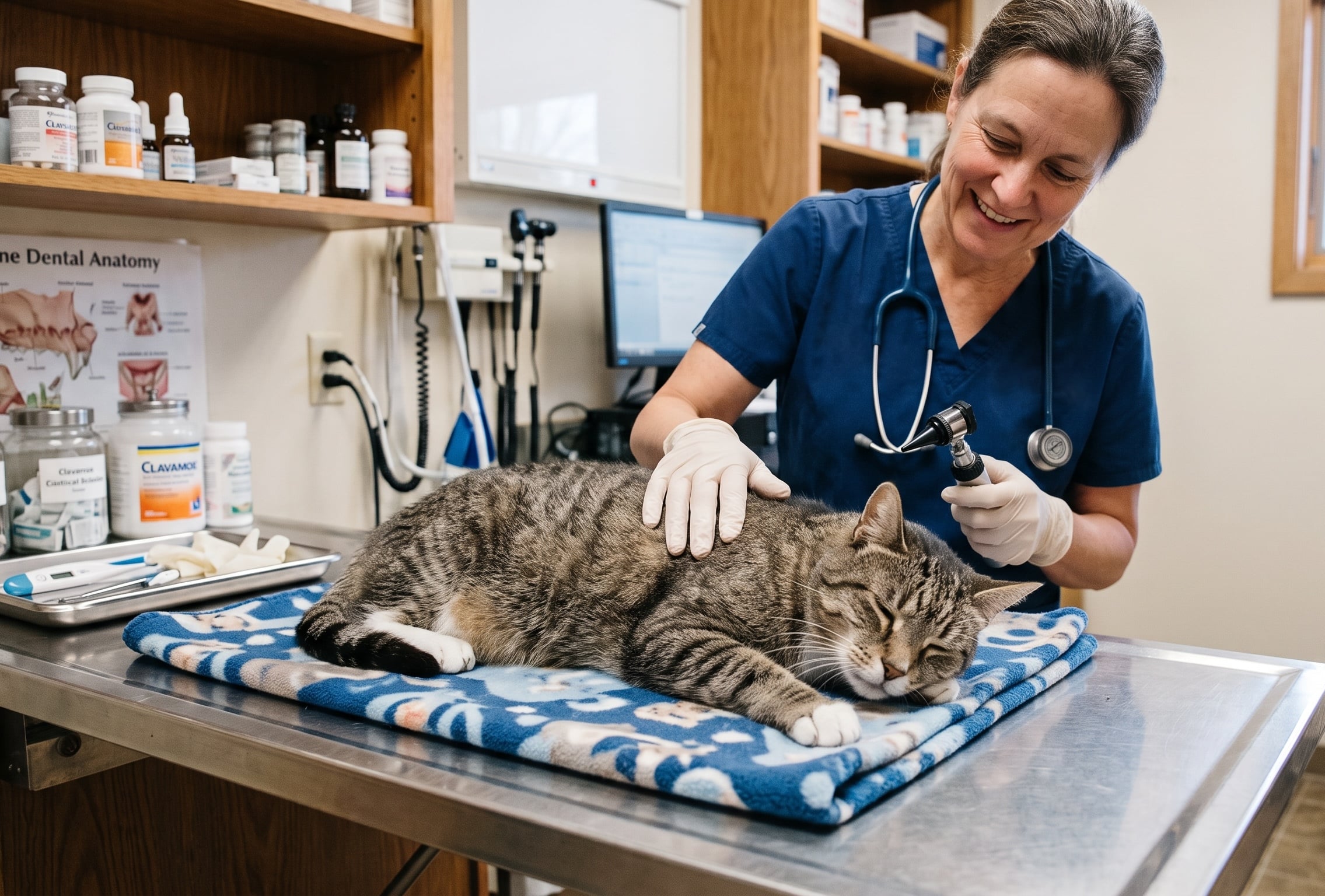
Once amlodipine is started, veterinarians typically plan a recheck blood pressure measurement within one to two weeks to see how the cat has responded and whether the current approach is appropriate. Blood pressure monitoring continues at intervals after that, with the exact schedule depending on how stable the readings are and whether any underlying condition is also being actively managed. Because blood pressure can be affected by stress, illness progression and other medications, veterinarians interpret each reading in the context of the full clinical picture rather than a single number in isolation.
Ongoing monitoring also gives the veterinarian an opportunity to reassess the underlying condition driving the hypertension, since CKD and hyperthyroidism are themselves managed over time and can influence blood pressure readings independently of amlodipine.
What Are the Side Effects of Amlodipine for Cats?
Amlodipine is generally well tolerated in cats, though veterinarians commonly ask owners to monitor for certain effects during the course of treatment. Lethargy or a noticeable decrease in energy is one of the more frequently reported observations, along with a reduced appetite in some cats. Because amlodipine acts on blood vessels throughout the body, some cats may also show signs associated with blood pressure dropping lower than intended, such as weakness or a wobbly gait, particularly if the dose needs adjustment.
Gum color and gastrointestinal changes, including a decreased interest in food or occasional vomiting, are also effects veterinarians may ask owners to watch for, especially in the early weeks of treatment when the body is adjusting. Cats being treated for CKD or hyperthyroidism at the same time may already have some overlapping signs from those conditions, which is one reason veterinarians consider a cat's full health picture rather than evaluating a single symptom in isolation.
Any new or worsening lethargy, appetite changes, weakness or collapse should be communicated to your veterinarian promptly rather than waiting for a scheduled recheck. Because amlodipine is often prescribed alongside management of another chronic condition, your veterinarian is best positioned to determine whether a given sign is related to the medication, the underlying condition or something unrelated.
What Are the Commercial and Compounded Options for Amlodipine in Cats?
The commercial tablet form of amlodipine besylate is available and remains an appropriate option for many cats. Though some veterinarians consider a compounded formulation instead. Commercial tablets come in a limited number of fixed strengths, which may not align precisely with a cat's weight-based dose — a meaningful consideration for a medication where consistent, accurate dosing helps a veterinarian track blood pressure trends over time. Some cats also have a known sensitivity to a specific ingredient in the commercial tablet, such as a particular protein, coloring agent or preservative, which a compounded formulation can be prepared to avoid. And for cats who resist a pill or spit out a capsule, a different delivery method can make it easier to keep dosing consistent.
Amlodipine can be compounded into several forms, including a flavored oral liquid, chew treat, capsule, tablet or transdermal cream applied to the inner surface of the ear flap. The form your veterinarian chooses will depend on what fits the individual cat and household best.
Feline hypertension frequently develops in cats already receiving daily medication for CKD or hyperthyroidism, and formulation choice (commercial or compounded) is often part of a broader conversation between owner and veterinarian about keeping a multi-medication routine manageable for both the cat and the household.
Frequently Asked Questions About Amlodipine for Cats
Why does my cat need blood pressure medication?
Veterinarians discuss blood pressure medication when a cat has been diagnosed with systemic hypertension, which is most often identified alongside chronic kidney disease, hyperthyroidism or certain cardiac conditions. Sustained high blood pressure is a focus of veterinary monitoring because of its association with changes to the eyes, kidneys, heart and brain over time. Your veterinarian will confirm hypertension through repeated blood pressure measurements before recommending amlodipine or any other management approach.
Can amlodipine be compounded for cats?
Yes. Amlodipine can be compounded into several forms, including a flavored oral liquid, chew treat, capsule or transdermal cream, for cats who have difficulty taking a standard tablet, need a dose that doesn't align with commercial tablet strengths, or have a known sensitivity to an ingredient in the commercial product. A valid prescription from your veterinarian is required for all compounded orders.
What Is the Amlodipine Dosage for Cats?
Amlodipine dosing for cats is weight-based and determined by your veterinarian based on your cat's blood pressure readings, size and any underlying condition being managed. Timing and frequency will also vary between individual cats. Your veterinarian will prescribe the specific dose and schedule appropriate for your cat — do not adjust the dose without consulting them first.
Does Amlodipine Interact With Other Medications?
Amlodipine can interact with certain other medications, so it is important to give your veterinarian a complete picture of everything your cat is currently taking — including any supplements. This is especially relevant for cats managing CKD or hyperthyroidism, since they are often prescribed additional medications concurrently. Your veterinarian will evaluate potential interactions before prescribing and will let you know if any adjustments are needed.
What Should I Do If My Cat Misses a Dose of Amlodipine?
If you miss a dose, give it as soon as you remember — unless it is close to the time of the next scheduled dose, in which case skip the missed dose and continue as normal. Never give two doses at once to make up for a missed one. If you are unsure what to do, contact your veterinarian for guidance.
How soon will my cat's blood pressure be rechecked after starting amlodipine?
Veterinarians commonly schedule a recheck blood pressure measurement within one to two weeks of starting amlodipine to evaluate how the cat has responded. Additional rechecks typically follow at intervals determined by your veterinarian based on how stable the readings are. This monitoring schedule may be adjusted if your cat is also being managed for CKD or hyperthyroidism at the same time.
Is amlodipine the same medication used for high blood pressure in people?
Amlodipine besylate is the same active ingredient used in human hypertension medications, though the dose, formulation and monitoring approach for cats are entirely different and determined by a veterinarian. Human amlodipine tablets are not an appropriate substitute for a veterinarian-prescribed feline formulation. Always source your cat's amlodipine through a valid prescription from your veterinarian.
Can amlodipine be used long-term in cats?
Veterinarians frequently discuss amlodipine as a long-term management medication for cats with systemic hypertension, particularly when the underlying condition driving it — such as CKD or hyperthyroidism — is itself a chronic condition. Ongoing blood pressure monitoring is a standard part of long-term use. Duration and any dose adjustments are determined by your veterinarian based on how your cat responds over time.
Key Takeaway
Amlodipine is a prescription calcium channel blocker that veterinarians commonly discuss for cats diagnosed with systemic hypertension, often in connection with chronic kidney disease, hyperthyroidism or certain cardiac conditions. Because sustained high blood pressure is associated with changes to the eyes, kidneys, heart and brain over time, veterinarians typically monitor blood pressure closely after starting treatment, with an initial recheck often planned within one to two weeks. Amlodipine is available as a commercial tablet and, for cats who resist oral medication, as a compounded flavored oral liquid or transdermal cream. If your veterinarian has recommended amlodipine for your cat, you can browse available formulations through Mixlab. A valid prescription is required for all orders.
Compounded medications are prepared by a licensed pharmacy for an individual patient based on a veterinarian's prescription. Because they're customized rather than mass-manufactured, they don't go through the FDA's premarket review process that FDA-approved drugs do.