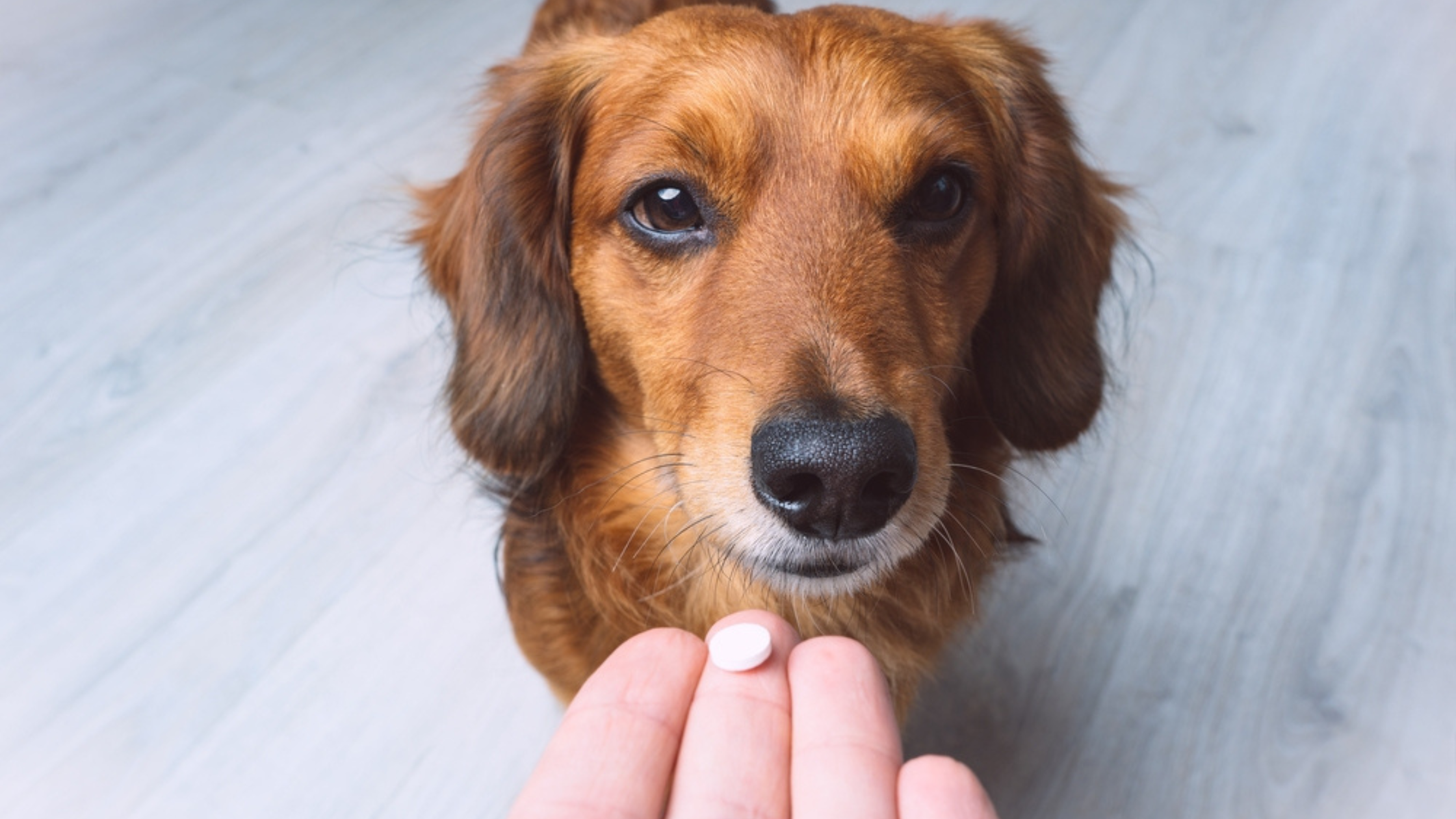
You've hidden the pill in cheese. Your dog ate the cheese. The pill is on the floor. Sound familiar?
If your dog won't take pills, you're far from alone. The good news is that most dosing struggles have a fix, whether it's a smarter way to hide a pill, a better technique for liquid medicine or a different medication form altogether. Here's what to try, step by step.
Key Takeaways:
- Hide pills in a small, strongly scented food and use the three-treat trick.
- Give liquid medicine slowly into the cheek pouch with an oral syringe.
- If food tricks fail, ask your veterinarian about a compounded form or flavor.
Why Won't My Dog Take Pills?
Most dogs refuse pills because of taste, smell, texture or a bad past experience. Dogs have a powerful sense of smell, so a bitter tablet tucked inside a treat often gets detected and spit out. Stress, pill size and a history of being forced to swallow can all make the next dose harder.
You're dealing with a common problem. In 2024, researchers at Massey University published Factors Associated with Medication Noncompliance in Dogs in New Zealand in Animals. Nearly one-third of dog owners (31%) reported challenges medicating their pet and 76% of those owners named a resistant dog as the main reason.
Refusal looks different from dog to dog. Spotting the pattern helps you pick the right fix.
Common Pill Refusal Behaviors in Dogs |
||
|---|---|---|
|
What Your Dog Does |
What It Often Means |
What to Try |
|
Eats the treat, leaves the pill |
They smell or taste the medicine |
Use a stronger-smelling wrapper or the three-treat trick |
|
Spits the pill out later |
The pill is bitter or too large |
Ask about a smaller tablet, liquid or chew |
|
Hides or runs at dosing time |
They link medicine with stress |
Rebuild the routine with rewards |
|
Refuses food entirely |
Possible nausea, pain or illness |
Call your veterinarian before the next dose |
How Do You Get a Dog to Take Medicine?
The easiest way to get a dog to take medicine is to hide it in a small amount of strongly scented food they love, then follow it right away with a plain treat. Always confirm with your veterinarian that the medication can be given with food first, since some need an empty stomach.
Here's a quick rundown of what works for most dogs.
Hide It in a Small High-Value Food
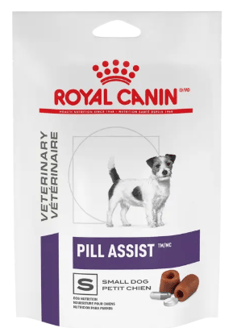
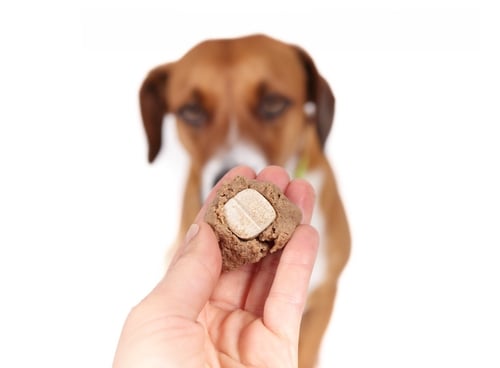
Use a bite-size piece of something your dog gulps without chewing. Soft cheese, plain cooked chicken, canned dog food or pill pockets all work well. Keep the portion small so your dog finishes it in one bite.
Try the Three-Treat Trick
Give one plain treat, then the treat hiding the pill, then a third plain treat held right near their nose. Your dog is so focused on the next treat that they swallow the second one fast.
Make It a Positive Routine
Give medicine at the same time each day, stay calm and end with praise or play. Dogs pick up on your stress, so a relaxed tone matters more than you'd think. If your dog tends to become anxious, ask your veterinarian whether a calming supplement like Zylkene or a pheromone diffuser like ADAPTIL® is a good fit.
How to Give Dog Pills When They Refuse
When food tricks fail, you can place the pill directly in your dog's mouth. Gently open the jaw, set the pill at the back of the tongue, close the mouth and stroke the throat downward to encourage a swallow. Then reward right away.
The American Kennel Club's 2026 guide to giving a dog pills suggests a pill device (sometimes called a pill gun or piller) to keep your fingers clear of teeth. A few more tips for hands-on dosing:
- Get a second set of hands. One person can gently hold and comfort your dog while the other gives the pill.
- Ask your veterinarian for a demo. A quick walkthrough at your next visit can build your confidence.
- Practice when it doesn't count. Use the pill device with plain treats on healthy days so it feels familiar.
- Know when to pause. If your dog is panicking, stop and try again later.
Our Take: Forcing a pill should be your backup, not your plan. If you're pilling by hand every day, that's a strong sign the medication itself needs to change, not your technique.
What If Your Dog Won't Take a Pill Even With Food?
If your dog won't take a pill even with food, they're likely smelling or tasting the medicine through the wrapper. Cut tablets are a common culprit because the rough edge releases more of the bitter taste. Try a stronger-smelling food, fully coat the pill or ask your veterinarian about a different form.
Here's what to try next:
- Switch wrappers. If cheese stopped working, try a different high-value food so your dog doesn't learn the pattern.
- Coat the pill completely. No exposed edges or corners.
- Don't crush without checking. Some medications lose effectiveness or taste worse when crushed. Only crush or split if your veterinarian confirms it's safe.
- Ask about other forms. Your veterinarian may be able to prescribe a liquid, chew or compounded medication instead.
Why Won't My Old Dog Take a Pill Even With Food?
Older dogs may refuse pills because of dental pain, a weaker sense of smell or appetite, trouble swallowing larger tablets or nausea tied to their condition. If an old dog won't take a pill even with food, a smaller or softer form often makes dosing easier. If they're refusing regular meals too, call your veterinarian.
How Do You Get a Dog to Take Liquid Medicine?
The best way to give a dog liquid medicine is with an oral syringe placed in the cheek pouch, not the front of the mouth. Tilt the head slightly, push the plunger slowly and hold the mouth closed briefly afterward. Mixing liquid into food can work but only if your veterinarian confirms it's safe and your dog eats every bite. Going slow gives your dog time to swallow and helps prevent gagging or spitting.
Follow these steps:
- Prep the dose. Shake the bottle if the label says to and measure the exact amount with the syringe provided.
- Position your dog. Approach from the side or from behind. Small dogs can be wrapped in a towel on your lap.
- Steady the head. Rest one hand gently under the chin.
- Insert from the side. Slip the syringe tip into the cheek pouch behind the canine tooth, not straight in from the front.
- Go slowly. Press the plunger a little at a time and let your dog swallow between pushes.
- Encourage a swallow. Hold the mouth closed for a few seconds and gently stroke the throat.
- Reward. Praise, a treat or a play break (unless the medication needs an empty stomach).
If your dog coughs or sputters, stop and let them recover before you try again.
Our Take: Liquid medicine gets a bad rap because most of them taste medicinal. A flavor your dog already loves, like chicken or bacon, can turn the syringe into something they come running for.
Can Compounded Medication Make Dosing Easier?
Yes. Compounded medication lets your veterinarian prescribe the same active ingredient in a form and flavor your dog will accept, like a chicken-flavored liquid instead of a bitter tablet. A licensed compounding pharmacy mixes it to your dog's exact dose.
What is compounded medication?
Compounded medication is a prescription customized by a licensed pharmacy for an individual pet. A pharmacist can adjust the dose, form, flavor or ingredients based on what your veterinarian prescribes.
Compounding is especially helpful for picky eaters, dogs with food allergies and pets taking several medications that may be combined into one dose. A veterinarian's prescription is required.
At Mixlab, we offer a wide variety of forms and more than 30 flavors.
Mixlab Medication Forms |
|
|---|---|
|
Form |
Good Fit For |
|
Oral liquids |
Dogs who spit out pills or have trouble swallowing |
|
Chew treats |
Food-motivated dogs who love snack time |
|
Capsules and tablets |
Dogs who take pills well in a pill pocket |
|
Transdermal pens |
Dogs who resist anything by mouth |
|
Topicals and otic syringes |
Skin and ear needs |
Popular flavors include bacon, chicken, beef and peanut butter. Browse our irresistible flavors or read about naturally flavored compounded dog medication. Compounded medications also carry a beyond-use date (BUD), so check the label for storage directions.
Our Take: Picking a flavor isn't guesswork. Start with the treat your dog would steal off the counter. If they live for bacon, ask for bacon. Matching the medication to a flavor they already love is the simplest way to make dosing feel like snack time.
Ask your veterinarian about a flavored compounded option, then submit your prescription to Mixlab.
Why Pet Parents and Veterinarians Turn to Mixlab
We're a PCAB®-accredited pet pharmacy that makes custom medications in the form and flavor your dog prefers. If your dog refuses a medication because of the flavor, we'll replace it free of charge within 7 days. Plus, we offer free, next-day delivery.
Ready to make medicine time easier? Submit your prescription online or contact Mixlab with questions.
Frequently Asked Questions
How Can I Get My Dog to Take a Pill?
Start by hiding the pill in a small piece of high-value food and using the three-treat trick: plain treat, pill treat, plain treat. If that fails, place the pill at the back of the tongue and stroke the throat. For dogs who refuse every time, ask your veterinarian about a flavored compounded form.
Can I Crush My Dog's Pill and Put It in Food?
Only if your veterinarian says it's safe. Some medications are coated or extended-release and shouldn't be crushed, and many taste more bitter once broken. Crushed pills mixed into a full meal also risk an incomplete dose if your dog doesn't finish. A compounded liquid or chew is often a better option.
What Can I Hide My Dog's Pill In?
Soft, strongly scented foods work best: cheese, plain cooked chicken, canned dog food, a small bit of deli meat or a pill pocket. Keep portions bite-size so your dog swallows quickly. Check with your veterinarian first if your dog has food allergies or a prescription diet.
Is It Safe to Hide Dog Pills in Peanut Butter?
Plain peanut butter is a common choice but always check the label for xylitol. The U.S. Food and Drug Administration warns that xylitol is dangerous for dogs, even in small amounts. Use a small dab and confirm with your veterinarian that the medication can be given with food.
What Should I Do If My Dog Spits Out Their Medicine?
Don't automatically give another dose, since you may not know how much they swallowed. Call your veterinarian or pharmacist for guidance. If spitting out medicine is a pattern, ask about switching to a smaller tablet, a chew or a flavored liquid your dog is more likely to accept.
Can I Mix My Dog's Liquid Medicine Into Food?
Sometimes. It can work for a healthy dog with a strong appetite if you use a small portion of food they'll finish completely. But some medications need an empty stomach or don't mix well with food, so check with your veterinarian before you try it.
Can My Veterinarian Switch My Dog's Medication to a Different Form?
Often, yes. Many medications can be compounded into liquids, chews or transdermal gels when your veterinarian prescribes it. Let your veterinarian know your dog is refusing their current form. They can send a new prescription to a compounding pharmacy like Mixlab.
Sources:
Odom, T.F., Riley, C.B., Benschop, J. and Hill, K.E. (2024). Factors Associated with Medication Noncompliance in Dogs in New Zealand. Animals, 14(17), 2557.Burke, A. (updated 2026). 6 Tips for Giving Your Dog Pills. American Kennel Club.
McCalley, L., DVM (2025). How to Give a Dog Liquid Medicine. Great Pet Care. Reviewed by Rhiannon Koehler, DVM.
Tufts Your Dog. When Your Dog Won't Swallow a Pill. Cummings School of Veterinary Medicine at Tufts University.
U.S. Food and Drug Administration. Paws Off Xylitol; It's Dangerous for Dogs.