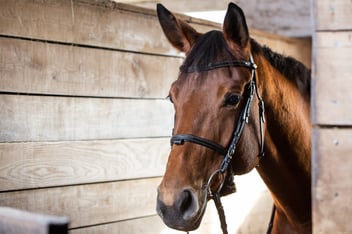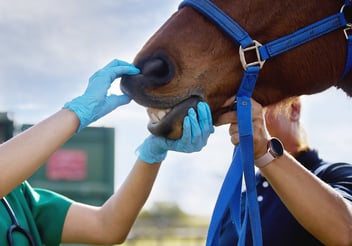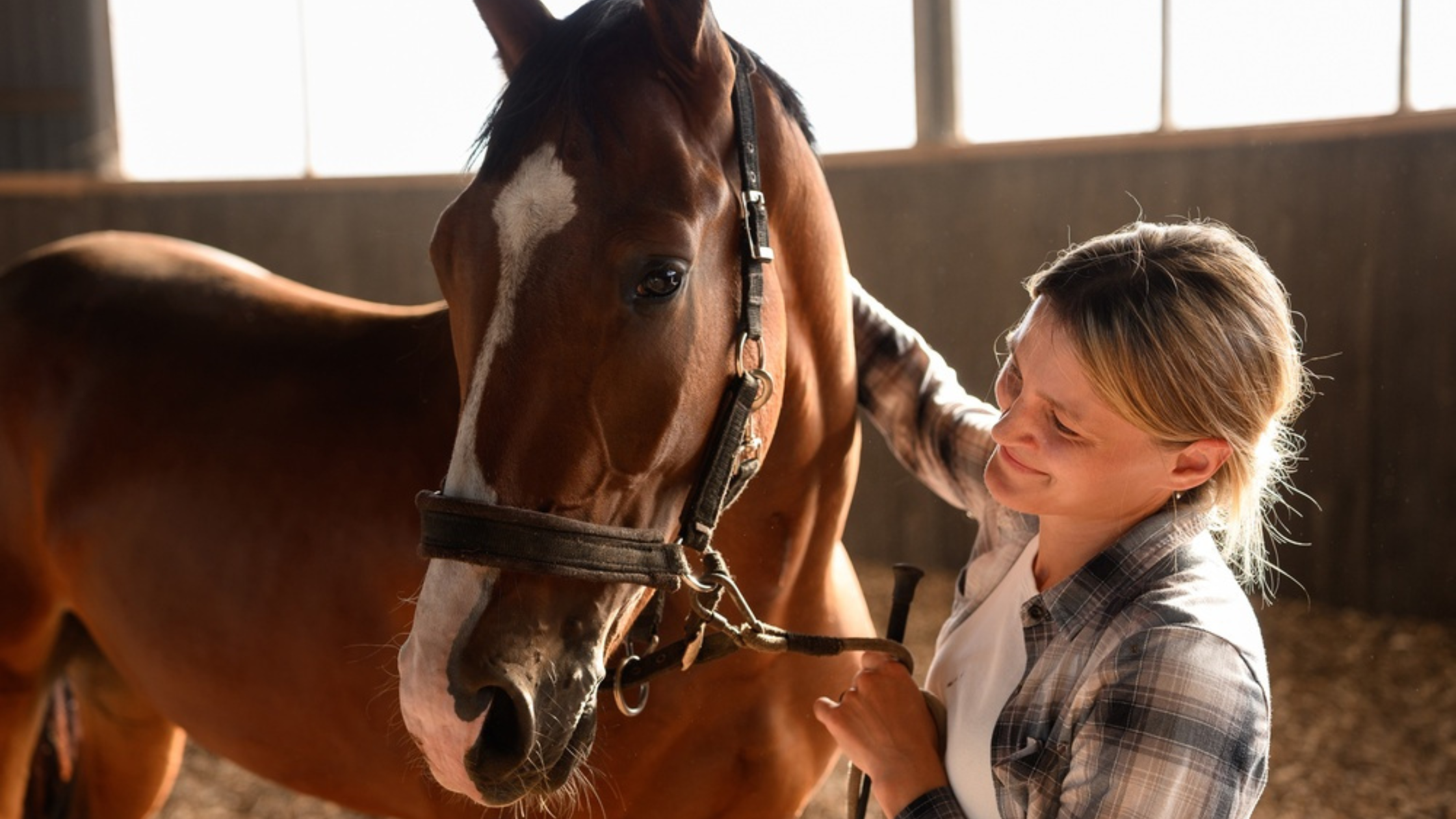
Has your senior horse started growing a thick, curly coat that just won't shed out? If so, your veterinarian may have brought up Cushing's disease. It's one of the most common hormonal conditions in older horses, and pergolide for horses is the medication veterinarians prescribe most often for it.
Below, we cover what horse owners and veterinarians should know about Cushing's disease treatment for horses: how pergolide works, typical dosing, side effects to watch for and the other options your veterinarian may consider.
Key Takeaways:
- Pergolide is the active ingredient in Prascend, which became the first FDA-approved drug for equine Cushing's disease (PPID) in 2011.
- A 2024 Equine Veterinary Journal study cites an estimated 21% of horses over 15 as having PPID.
- The labeled starting dose is 2 mcg/kg once daily, adjusted by a veterinarian.
- • Decreased appetite is the most commonly reported side effect of pergolide.
- • Veterinarians can send pergolide prescriptions to Mixlab, which compounds pergolide for horses.
What Is Cushing's Disease in Horses?
Cushing's disease, also known as pituitary pars intermedia dysfunction (PPID), is a slowly progressing hormonal disorder that primarily affects horses over age 15. It develops when the nerves that regulate part of the pituitary gland lose their ability to deliver dopamine signals, causing the gland to produce excessive amounts of hormones, including ACTH.
How Common Is Cushing's Disease in Horses?
Cushing's disease is more common than many owners realize. A 2024 study found that 12% of senior horses had been diagnosed with PPID, though estimates suggest it affects up to 21% of horses over 15.
What Are Warning Signs of Cushing's Disease in Horses?
Common signs your veterinarian will look for include:
- A long, curly coat that doesn't shed normally
- Muscle loss along the topline
- Abnormal fat deposits, especially over the eyes and tailhead
- Excessive sweating, drinking or urination
- Laminitis or recurring hoof soreness
- Lethargy or recurring infections
What Is Pergolide for Horses and How Does It Work?
Pergolide is a dopamine agonist that veterinarians prescribe to manage the clinical signs of Cushing's disease in horses. It acts on dopamine receptors in the pituitary gland, stepping in for the dopamine signal that PPID disrupts.
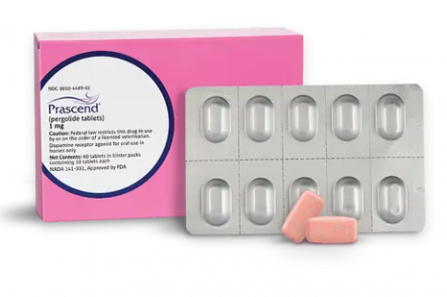
Pergolide mesylate became the first FDA-approved equine Cushing's medication in 2011, when the FDA approved Boehringer Ingelheim's Prascend tablets. Today, pergolide remains the most widely prescribed medication for Cushing's disease in horses, and it's available by prescription only.
In 2024, the British Equine Veterinary Association's primary care clinical guidelines for PPID, published in the Equine Veterinary Journal, reviewed the available evidence and found support for pergolide as a PPID therapy. That's a big reason most veterinarians start here.
Veterinarians can prescribe the FDA-approved tablet or, when a horse needs a different strength or format, a compounded pergolide from a pharmacy like ours.
What Are the Meds for Cushing's in Horses?
Pergolide is the primary medication for Cushing's in horses, and most other options are used alongside it rather than instead of it. Here's how the common Cushing's meds for horses and supportive care options compare.
Cushing's Medications for Horses Compared |
|||
|---|---|---|---|
|
Option |
Type |
How Veterinarians Use It |
Prescription Needed? |
|
Dopamine agonist |
First-line medication for PPID |
Yes |
|
|
Antihistamine (serotonin antagonist) |
Sometimes added to pergolide when test results stay elevated |
Yes |
|
|
Supportive supplements |
Vitamin E, selenium, omega-3s |
Nutritional support alongside medication |
No, but check with your veterinarian |
|
Management changes |
Clipping, diet, hoof, dental and parasite care |
Daily care for horses with PPID |
No |
Consider an Antihistamine Medication
Cyproheptadine is a serotonin antagonist some veterinarians add to a horse's plan. According to a summary of the Equine Endocrinology Group's recommendations, it may be considered as an add-on when retest results remain high, and signs haven't improved. It isn't typically used on its own.
Shop Cyproheptadine from Mixlab →
Add Supportive Supplements
Supplements such as vitamin E, selenium, and omega-3 fatty acids are sometimes recommended to support overall health in older horses. They're not a replacement for medication, so talk with your veterinarian before adding anything new.
Shop Vitamin E for Horses from Mixlab →
Make Lifestyle Modifications
Day-to-day care plays a big role for horses with PPID. That can include body clipping in warm weather, a low-sugar and low-starch diet when your veterinarian recommends it, regular farrier visits, parasite control, and routine dental checks.
Learn More About Dental Care for Senior Horses →
Our Take: Cushing's treatment for horses is usually a long-term commitment, so the daily routine has to work for you and your horse. If pill time has turned into a standoff, ask your veterinarian whether a compounded pergolide in a different format or strength could make daily dosing easier.
What Is the Typical Pergolide Dosage for Horses?
The labeled starting dose of pergolide for horses is 2 mcg/kg (0.002 mg/kg) by mouth once daily. A veterinarian may adjust it up to 4 mcg/kg per day, according to the 2021 Prascend product monograph filed with Health Canada.
The table below shows what that range works out to at a few common body weights. It's for reference only. Your veterinarian sets your horse's actual dose.
Example Pergolide Doses by Weight |
||
|---|---|---|
|
Horse Weight |
Starting Dose (2 mcg/kg) |
Upper Labeled Dose (4 mcg/kg) |
|
800 lb (363 kg) |
0.73 mg |
1.45 mg |
|
1,000 lb (454 kg) |
0.91 mg |
1.81 mg |
|
1,200 lb (544 kg) |
1.09 mg |
2.18 mg |
What happens after your horse starts pergolide? The same monograph recommends endocrine retesting every 4 to 6 weeks while the dose is being adjusted. If a horse goes off feed, the label suggests pausing for 2 to 3 days and restarting at half the previous dose before slowly increasing again.
What Horses Can Not Have Pergolide?
A few handling notes matter too. The label says pergolide isn't for horses under 3 years old or for breeding, pregnant, or lactating horses, since it hasn't been evaluated in them. People who are pregnant or nursing should wear gloves when giving it, and tablets shouldn't be crushed.
What Are the Side Effects of Pergolide in Horses?
Decreased appetite is the most common side effect of pergolide in horses. In the field study described in the 2021 Prascend product monograph, 32.8% of the 122 horses treated showed reduced appetite.
Adverse Reactions in the Prascend Field Study |
|
|---|---|
|
Reaction |
Horses Affected (n=122) |
|
Decreased appetite |
32.8% |
|
Lameness |
18.0% |
|
Diarrhea or loose stool |
9.8% |
|
Colic |
9.8% |
|
Lethargy |
9.8% |
|
Abnormal weight loss |
9.0% |
|
Behavior change |
4.9% |
Some of these reactions, like lameness, also overlap with signs of PPID itself. That's one reason regular check-ins with your veterinarian matter.
Horse owners often call the dip in appetite and energy the "pergolide veil." It tends to show up early, which is why many veterinarians start with a partial dose and work up. Contact your veterinarian if your horse stops eating or seems off.
How Can You Get Pergolide for Horses from Mixlab?
Your veterinarian sends a prescription to Mixlab, and our team prepares and ships your horse's pergolide. Pergolide always requires a veterinarian's prescription.
We're a PCAB-accredited pharmacy that compounds pergolide capsules for horses, with next-day delivery so you're not waiting on refills.
How Ordering With Mixlab Works →
Horse owners, ask your veterinarian to send your horse's prescription to Mixlab, or contact our team with questions.
Frequently Asked Questions About Pergolide for Horses
Is Pergolide a Lifelong Medication?
Usually, yes. PPID is a progressive condition, so horses on pergolide typically stay on it long-term. Your veterinarian may adjust the dose over time based on retesting and clinical signs. Don't stop or change your horse's pergolide without talking to your veterinarian first.
How Often Should a Horse on Pergolide Be Retested?
During dose adjustments, horses are typically retested every 4–6 weeks. Once the dose is stable, your veterinarian will recommend an ongoing monitoring schedule based on your horse's needs.
Do Horses Need a Prescription for Pergolide?
Yes. Pergolide is a prescription medication, so a licensed veterinarian has to diagnose your horse and prescribe it. Your veterinarian can send that prescription to a pharmacy like Mixlab, which prepares the medication and ships it to you or the clinic.
Can a Horse with Cushing's Disease Still Be Ridden?
It depends on your horse. Hoof health, body condition, and overall comfort all factor in, especially if your horse has a history of laminitis. Your veterinarian and farrier can help you decide what level of work is right while your horse is on Cushing's medication.
Resources:
Boehringer Ingelheim Animal Health Canada. Prascend (pergolide mesylate) Product Monograph. Health Canada, 2021.British Equine Veterinary Association. Advances in Endocrinology Take Centre Stage in Latest EVJ (BEVA primary care clinical guidelines for PPID). BEVA, 2024.
Loving, Nancy S. Researchers Assess Health and Disease in U.S. Senior Horses (summarizing Herbst et al., Equine Veterinary Journal, 2024). EquiManagement.
Drug to Treat PPID Clinical Signs Receives FDA Approval. TheHorse.com, 2011.
New EEG Recommendations for the Diagnosis and Treatment of PPID. The Laminitis Site.